
You just got a screenshot. Someone typed a question into ChatGPT, and your business showed up in the answer. That feels like a win. But a screenshot is not an AI visibility metric. It's one answer, to one question, on one day. Pew Research found that people often stop at AI answers instead of clicking through, so a mention is not a visit.
This guide covers why buyer prompts, not keywords, are the real unit of measurement, how to build a fixed prompt set for your vertical, and why scheduled re-runs beat one-off snapshots. Then we define the four AI visibility metrics in Epicware's recommended framework: share of voice across buyer prompt clusters, citation and mention rate, AI referral sessions, and branded query lift. No hype, just numbers you can defend in front of an owner.

TL;DR
- • A screenshot proves nothing repeatable. A tracked rate, run on a fixed prompt set, does.
- • Build a 20-40 prompt set from real customer phrasing (call logs, GBP questions, autocomplete), freeze it, and run it monthly on ChatGPT, Gemini, Perplexity, and AI Overviews.
- • Four metrics worth reporting: share of voice, citation and mention rate, AI referral sessions, and branded query lift.
- • All four run on data you likely already have — prompt logs, GA4, Search Console, and GBP insights.
- • No published industry benchmark exists for any of this in 2026. Compare against your own prior months, not an "industry average."
Why a ChatGPT Screenshot Is Not a Metric
A ChatGPT screenshot feels like proof. It captures one prompt, one phrasing, one engine, one day. Run the same prompt tomorrow and the names, order, and cited sources can all change. A screenshot proves nothing repeatable; a tracked rate proves what visibility is actually worth over time.
Pew Research Center found in July 2025 that Google users are less likely to click links when an AI summary appears. Visibility in an answer does not guarantee a visit, so count mentions and sessions separately.
Vanity prompt testing is the same failure in a new costume. Typing ten prompts into ChatGPT shows what one person saw once: no denominator, no trend line, no comparison against the competitors sitting in those same answers.
Owners are usually shown a slide of pasted screenshots. An owner who only cares about calls and bookings can't act on that, so the channel gets cut at the first budget review and the work stops.
A real metric has to pass three tests. Repeatable: same fixed prompt set, same engines, same cadence. Attributable: traceable to sessions, calls, or branded search. Comparable: moves over time and against competitors. Fail one test, and the number belongs in an appendix, not on the report.
One honesty note up front: the four metrics below are Epicware's recommended framework, drawn from client reporting practice. No published industry standard for AI visibility measurement exists yet, and we'll say so plainly throughout.
Buyer Prompts: The Real Unit of Measurement
Screenshots fail partly because they measure the wrong unit. AI engines answer in natural language. Nobody types "emergency dentist open sunday" into ChatGPT; they type "who can I call for a toothache on a Sunday." Different input, different answer. The unit that matters is the buyer prompt, not the keyword.
A buyer prompt cluster is five to fifteen real phrasings of one commercial intent. For a local business, the usual clusters are emergency or urgent, price or cost, best or top-rated, comparison, and location or neighbourhood. Winning the "best or top-rated" cluster is really a reputation problem in disguise. It's the same ground we cover in Does ChatGPT Make Up Citations?.
Share of voice, in plain language: out of every 100 answers checked this month, how many named you? The weighted version credits a first-position mention more than one buried at number seven.
AI answers are non-deterministic. Run one prompt three times and you can get three different lists, which is why you report a rate across repeated runs, never a single result. "We showed up in ChatGPT" doesn't belong in a monthly report. Without a fixed prompt set there's no denominator: citation rate can't be computed, trends can't be tracked, and no number survives an owner asking how it was produced.
Building a Fixed Prompt Set for Your Vertical
Your prompt set should sound like your customers, not like a marketer. A café might run "best brunch spot in [area]" and "where to eat with kids." A clinic needs "walk-in clinic open now." Salons: "balayage specialist in [district]." Car workshops: "car aircon repair [neighbourhood]." Tuition centres: "O level maths tuition [town]."
Build yours from data you already own: front desk call logs, sales transcripts, Google Business Profile questions and reviews, Google autocomplete, People Also Ask, and the phrasing customers actually use in chat messages.
Then freeze it. Date the file, store it, and only change it deliberately. If you add ten prompts in month four, note that in the report so the trend line stays honest. Aim for twenty to forty prompts, split across the clusters that drive revenue, and run the same set on ChatGPT, Gemini, Perplexity, and Google AI Overviews. Record location context too, since answers vary by city and even by district.
Scheduled Re-Runs: Why Cadence Beats Snapshots
Once the prompt set is frozen, the next question is cadence. Monthly is the minimum if you want a trend you can defend. In competitive verticals like clinics and salons, where one new entrant can reshape the answers within weeks, weekly is better.
Log the raw answer text, not just whether you appeared. In month three, when a mention vanishes, you'll want to audit why. A grid of screenshots can't tell you if the engine changed its sources, its wording, or its ranking order. Treat the trend as the deliverable: a number with three months of history survives a review; a one-off audit does not.
This is where tracking software earns its place. Epicware's AI Visibility Tracking runs fixed prompt sets on a schedule and stores the answer text, so the owner gets trend lines instead of a folder of screenshots.
The Four AI Visibility Metrics That Matter
Once the runs are on a schedule, the question becomes what actually goes on the page. We use four metrics, summarised below.
| Metric | Owner question | Data source | Cadence |
|---|---|---|---|
| Share of voice across buyer prompt clusters | Are we being picked? | Prompt run logs | Monthly |
| Citation and mention rate | Are we being sourced? | Prompt run logs | Monthly |
| AI referral sessions | Are people arriving? | GA4 referral reports | Weekly |
| Branded query lift | Is demand growing? | Search Console; GBP insights | Monthly |
No new data warehouse required: it's the four sources in the table above, already sitting in tools you use. Why four and not ten? Each metric traces back to a session or to demand. A candidate number that can't do either stays out of the report.
Metric 1: Share of Voice Across Buyer Prompt Clusters
Out of every 100 AI answers checked this month, how many named you? That single question is what share of voice answers.
The raw formula is prompts where your business is named, divided by total prompts run, multiplied by 100. The weighted version gives extra credit when you're named first rather than seventh. Report both, since being picked and being picked first are different outcomes. Managing several outlets? Our multi-location GBP management guide covers how to standardise reporting per location.
Benchmark honestly: there's no credible published industry average in 2026. Compare against your own prior months and against competitors inside the same runs. Published research on AI brand visibility found that results vary sharply by engine and by how established the brand already is, so relative share is defensible while absolute share is not.
Segment by cluster and the figure becomes a to-do list. "We're named in 70 percent of emergency prompts but 12 percent of price prompts" tells you exactly where the next piece of content should go.
Four traps to avoid: treating one prompt as a trend, blending engines into one figure without saying so, ignoring first-mention weighting, and changing the prompt set mid-stream so the denominator moves underneath you.
Metric 2: Citation and Mention Rate
Being picked and being trusted as a source are not the same thing, and the two words aren't interchangeable. A mention means your brand name appears in the answer text. A citation means the engine lists or links your URL as a source. They move at different speeds.
Run the math: mentions divided by prompts run, and citations divided by prompts run. Report both as percentages, side by side, every month. A widening gap means the engine knows you but doesn't yet trust you as a source.
Citations matter for conversion because they're the mechanical path to referral sessions. A brand named in prose but never cited gets awareness with no route to the website.
To lift citation rate: answer-shaped pages with question-led headings, local business schema, consistent name/address/phone data, a complete Google Business Profile, and third-party citations from local press, directories, and industry roundups. Engines cite outside sources more often than your own pages.
Three things routinely inflate this number without meaning to: counting a mention in a competitor comparison table as a win, confusing "named" with "recommended," and logging a citation when the engine only linked a directory listing that happens to mention you.
Metric 3: AI Referral Sessions
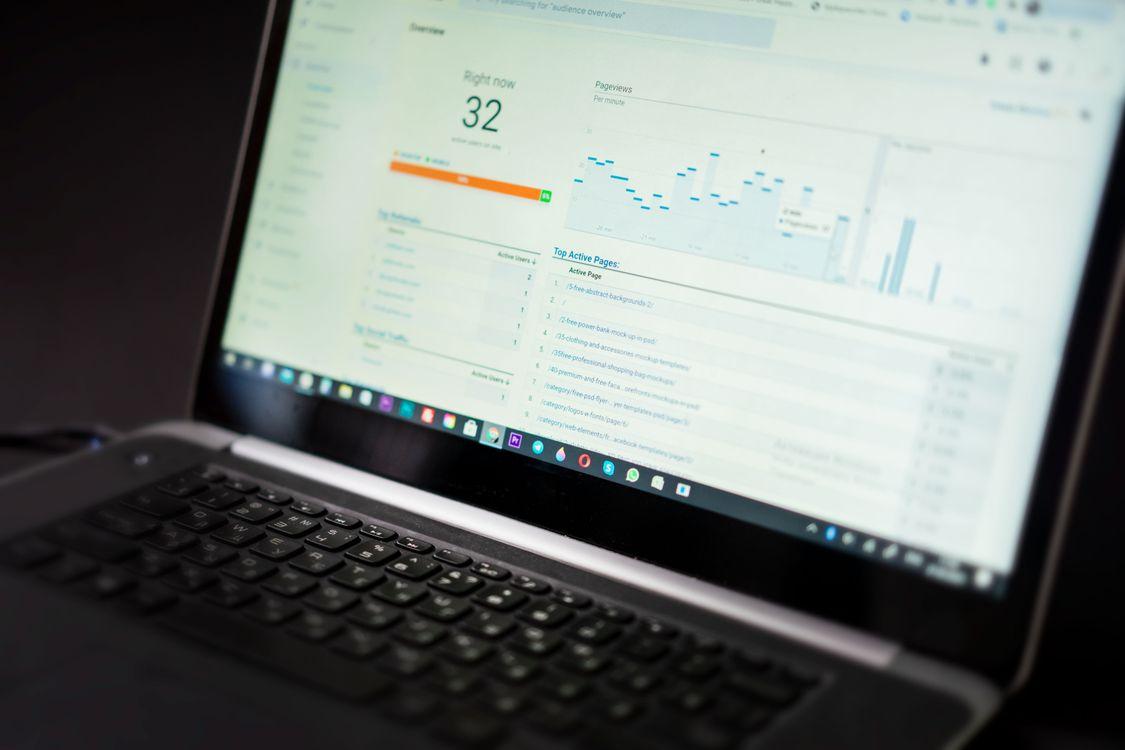
A mention proves the engine knows your brand. It doesn't prove anyone showed up. AI referral sessions are sessions in your analytics where the referrer is an AI engine: chatgpt.com, perplexity.ai, gemini.google.com, or copilot.microsoft.com. This metric is what closes that gap.
Why separate the two? Visibility in an answer doesn't guarantee a click. The same Pew finding on AI summaries applies here, so count mentions and sessions apart rather than inferring one from the other.
Isolate them by building a custom channel group in GA4 for AI assistants. Add UTMs to links you control: Google Business Profile, website, bios, email signatures. Watch for "direct" traffic spikes a few days after a prompt run, since some AI apps strip referrers.
Report AI referral sessions, engaged sessions, and conversions: calls, form fills, direction requests, bookings. Volumes will be small in 2026. Lead with the trend and conversion rate, not the raw count.
Watch for three mistakes here: crediting all brand-direct traffic to AI, lumping engines into one line so you can't see which one converts, and ignoring the lag between an AI answer and a later branded search.
Metric 4: Branded Query Lift
If AI referral sessions tell you who clicked, branded query lift tells you who remembered. It measures the change in branded search impressions and clicks in Google Search Console over time, a lagging proxy for demand that AI answers helped create.
Here's why it works: many people read an AI answer, don't click the link, then search your brand name later. That later search is real demand, and it shows up in Search Console even when the AI referral session doesn't.
To measure it, open the Search Console Performance report and filter queries containing your brand name plus common misspellings and abbreviations. Compare 28-day windows month over month, and exclude your own paid brand campaigns so you're not measuring your own ad spend.
Normalise before you celebrate: divide branded impressions by total impressions, or branded sessions by total sessions. That stops a seasonal spike from looking like an AI win. Also split Google Business Profile discovery traffic from classic search.
Watch the pitfalls. Don't credit all branded lift to AI when a PR mention or a review surge could explain it just as well. Be careful with small absolute numbers, and if your brand name is a common word, expect inflated counts.
The Monthly AI Visibility Report an Owner Will Read
Owners read the top line first, so page one should open with calls, bookings, direction requests, and form fills. The four AI visibility metrics sit underneath as the evidence for why those numbers moved.
Keep it to one page. Four metric tiles, each showing this month, last month, and the three-month trend. No screenshot grids in the body; if you want to show raw answers, put them in an appendix the owner can ignore.
Under each tile, write one "so what" line: what changed, why you think it changed, and what you'll do next month. Cap the action list at three items. Three is a plan; ten is a wish list.
Make it auditable. State the prompt set version, the number of runs, the engines covered, and the date range. If the owner asks how a number was produced, the answer should take thirty seconds, not a phone call. Run counts matter because AI answers vary even with fixed settings; one run is not a trend.
Finally, label the framework plainly on the page itself. Being upfront about where these four metrics came from makes the report more credible, not less.
What to Leave Out of the Report
A wall of screenshots or a slide showing one prompt isn't evidence. It's one answer, from one day, on one engine. Leave it in the appendix. The same goes for raw mention counts: "we appeared in 43 AI answers" tells the owner nothing until you say out of how many prompts, on which engines, and over what period.
Be equally strict with benchmarks. As of 2026, no vendor or research house has published a credible AI visibility benchmark set, so any "industry average" on the page needs a cited source, or it comes out.
Jargon is the quiet killer. Share of voice, prompt cluster, citation rate, and GEO each need one plain-language line the first time they appear; the reader runs a clinic or a café, not a marketing team. And if a metric can't connect back to calls, bookings, or branded demand, cut it before the owner does.
The Monthly Workflow, Step by Step
Block two hours on the first Monday. Do the same six steps in the same order each month.
- Run the prompts. Fire your fixed prompt set across ChatGPT, Gemini, Perplexity, and AI Overviews. Save the raw answer text with the date and engine noted — no screenshots needed, just the text.
- Log mentions and citations. For each prompt and engine, record whether your brand is mentioned and whether your URL is cited. Tag first mentions separately so weighted share of voice can be calculated later.
- Pull AI referral sessions. In your analytics, build an AI assistant channel group once and reuse it every month. Record sessions and their conversions — calls, form fills, bookings.
- Pull branded queries. In Search Console, export the same date range and filter for your brand name. Normalise branded impressions against total impressions so seasonal spikes don't fool you.
- Compute and interpret. Calculate the four metrics, compare to the prior month, and write one plain line per metric.
- Assign actions and schedule. Set next month's content and GBP tasks, then book the next run. Tools can automate steps one and two — manual runs work fine at small prompt-set sizes.
Worked Example: Six Months for a Local Clinic
Here's how those six steps play out in practice. A two-location dental clinic built a 30-prompt set across five clusters: emergency, price, best-rated, comparison, and neighbourhood, and ran it monthly on four engines.
In month one, the clinic was named in 4 of 30 prompts — a 13 percent share of voice. It was cited in just 1 of 30. AI referral sessions hit 12, and branded impressions were flat against the prior quarter.
By month three, after publishing answer-shaped service pages and tightening the Google Business Profile, it was named in 11 of 30 prompts (37 percent). Citations rose to 5 of 30, AI referral sessions reached 40, and a first measurable branded query lift appeared.
Month six showed 18 of 30 prompts named (60 percent), 12 of 30 citations, 96 AI referral sessions with 22 producing a booked appointment, and branded impressions up against the same period last year.
Each month the owner received one page: outcomes first, four metric tiles, three actions. The trend got the channel funded, not any single screenshot. These figures are illustrative to show the reporting shape, not a benchmark. Your vertical, market size, and competitor set will produce different numbers.
How to Increase AI Visibility Once You Can Measure It
That clinic's climb came from four specific inputs, not luck.
Fix the inputs first. AI engines pull from your Google Business Profile, your site, and third-party sources. Complete hours, categories, services, attributes, photos, and Q&A, and keep name, address, and phone data identical everywhere.
Publish answer-shaped content: question-led headings, a direct first sentence, local specifics in the body. Human-friendly Q&A content is what gets cited.
Earn third-party citations from local press, chamber and association directories, industry roundups, and review sites — the external-over-owned pattern from Metric 2 holds here too, so owned content alone won't lift citation rate.
Build review volume and recency on autopilot. Answers to "best in [city]" prompts track with review count and how recently reviews arrived. Automated collection after each visit, as in EpicReview, keeps both moving without the front desk chasing anyone.
Then measure the change against the four metrics. An effort should move at least one within 60 to 90 days. If nothing moves, change the input, not the reporting. Expect a lag too, since content and citation work typically takes 4 to 12 weeks to surface in prompt runs.
AI Visibility Tools: What to Track and What to Ignore
You can do all of the above without software. Once your prompt set grows past a dozen questions, tools start earning their keep.
Five categories, five jobs: prompt-run trackers log mentions across engines, GEO content tools help you publish answer-shaped pages, analytics attribution isolates AI referral sessions, review platforms build the volume and recency that "best in [city]" answers reward, and local rank trackers cover the Map Pack. Expect one tool per category, not one that does everything.
Before you buy, ask: does it run a fixed, versioned prompt set? Does it report mentions and citations separately? Does it expose raw answer text so you can audit it? Does it segment by engine and location? A no on any of these means the data won't survive a monthly review. Ignore dashboards showing "you appeared in 10 answers" with no denominator or trend, one-off audits sold as ongoing measurement, and screenshot-only exports.
Epicware covers this ground with AI Visibility Tracking and GEO (prompt runs, citation auditing, monitoring), plus EpicMap for geogrid rank tracking, EpicReview for review collection, and EpicSocial for localised publishing. It's one option among several — the framework works without it.
One caveat for vendor conversations: ask to see the prompt set and date range behind any number a tool shows you before you trust it.
Report the Trend, Not the Screenshot
Build your fixed prompt set this week. Version it, date it, and run it monthly, since every other metric here depends on that denominator existing. On the same day, add an AI assistant channel group in your analytics and start a branded query baseline in Search Console. Together they give you sessions and demand, and neither costs a cent.
Keep the report to one page, outcomes first, with the four metrics as evidence underneath. Apply the only test that matters in a monthly review: if a number can't be tied to a call, a booking, a direction request, or branded demand, leave it off the report.
Epicware's AI Visibility Tracking runs your fixed prompt set on a schedule across ChatGPT, Gemini, Perplexity and AI Overviews, so you report a trend instead of a folder of screenshots.
See AI Search Visibility Tracking Singapore →Related Articles
Written by Vignesh, Founder, Epicware at Epicware, an AI-powered digital marketing agency in Singapore.