

Customer review platforms are defined as third-party websites and systems where consumers post public feedback about businesses, products, or services. Five main functional categories exist: local search-facing platforms, dedicated company review sites, industry-specific directories, marketplace feedback systems, and software or SaaS review hubs. Each category serves a different stage of the customer journey and a different business goal. Choosing the right types of customer review platforms is not about being everywhere. It is about being present where your buyers actually make decisions.
1. What are the types of customer review platforms?
Customer review platforms fall into five categories based on their primary function and the audience they serve. Understanding these categories helps business owners and marketers allocate time and budget where it produces real results. Spreading effort across every platform wastes resources and dilutes your reputation signal.
The five categories are:
- Local search-facing platforms (Google Business Profile, Yelp, Better Business Bureau)
- Dedicated company review sites (Trustpilot and similar general-purpose platforms)
- Industry-specific directories (G2 for software, TripAdvisor for travel and hospitality)
- Marketplace and seller feedback systems (Amazon, Shopee, and similar ecommerce platforms)
- Software and SaaS review hubs (G2, Capterra, and B2B-focused platforms)
Each type captures a different kind of feedback. Businesses that understand this structure can build a presence that matches how their customers actually search and decide.
2. Local search-facing platforms for small and medium businesses

Local search-facing platforms are the most important starting point for any business serving a defined geographic area. Google Business Profile is free and remains the universal baseline for local businesses in 2026. Reviews on Google directly influence local search rankings, map pack placement, and click-through rates from search results.
Key benefits of local review platforms include:
- Search visibility: Google reviews feed directly into Google Maps ranking algorithms.
- Trust signals: Star ratings appear in search results, influencing click decisions before a user visits your website.
- Accreditation options: Better Business Bureau accreditation starts at roughly $500 per year and adds a credibility badge recognized by American consumers.
- Syndication reach: Reviews collected locally can be distributed across Bing and other search engines through syndication tools.
Yelp remains a strong secondary platform for restaurants, salons, and service businesses. Its audience actively searches with purchase intent, which makes a Yelp review more likely to convert than a passive social media mention.
You can show your best reviews on your own site with a Google review widget.
⚡ Pro Tip
Set up a Google review link and display it as a QR code at your checkout counter or on receipts. This single tactic removes friction and consistently increases review volume for physical locations.
3. Dedicated general company review sites
Dedicated company review sites focus on overall business reputation rather than a single transaction or product. Trustpilot is the most recognized platform in this category. Trustpilot paid plans range from $200 to over $1,000 per month, while free accounts support basic review collection and display.
These platforms work best for:
- eCommerce brands seeking to build trust with first-time buyers
- Service businesses that need a neutral third-party record of customer satisfaction
- Companies managing complaints publicly to demonstrate responsiveness and accountability
Private feedback channels play a different role; see private vs public reviews.
Verified purchase badges on these platforms carry significant weight. A review marked as verified tells prospective customers that the feedback comes from a real transaction, not a planted comment. Platforms with transparent verification methods also reduce the risk of fake reviews distorting your score.
⚡ Pro Tip
Prioritize one general review site that your industry peers use most. Spreading thin across five platforms produces weaker signals than concentrating effort on two with strong review volume.
4. Industry-specific directories for targeted audiences
Industry-specific directories serve audiences with high purchase intent in a defined category. TripAdvisor dominates travel and hospitality. G2 and Capterra lead in software. Houzz targets home improvement. These platforms attract buyers who are already deep in the research phase, which means conversion rates from niche directory traffic tend to be higher than from general platforms.
“Niche authority platforms gain trust faster than generic ones by focusing deeply on specific business categories or industries.” — Munix Studio
The trade-off with niche directories is scale versus specificity. A restaurant listed on TripAdvisor reaches a smaller total audience than one on Google, but that TripAdvisor audience is actively planning a meal or a trip. The qualified nature of that traffic makes each review more valuable per impression.
- Identify the dominant directory in your industry before building a presence anywhere else.
- Claim and complete your profile fully. Incomplete profiles rank lower within directory search results.
- Encourage reviews from verified customers. Many niche directories weight verified reviews more heavily in their internal ranking algorithms.
- Pair niche listings with broader platforms. Niche authority complements, rather than replaces, your Google Business Profile presence.
Hybrid review models that combine expert editorial content with user-generated reviews are common on leading niche directories. This approach balances credibility for top-tier products with volume coverage for the long tail of offerings.
5. Marketplace and seller feedback systems
Marketplace review systems operate inside ecommerce platforms and directly affect purchase decisions at the point of sale. Amazon, Shopee, and similar platforms separate reviews into three layers: product reviews, seller reviews, and order-level feedback. Each layer serves a different function.
Key features of marketplace feedback systems:
- Product reviews assess quality, performance, and fit. They appear on the product listing and influence conversion rates.
- Seller reviews assess fulfillment, communication, and reliability. They affect seller ranking and buy-box eligibility.
- Order feedback captures post-delivery satisfaction and flags logistics issues before they escalate.
Review syndication is a critical but often overlooked feature in this category. Syndication allows a single set of reviews to display across multiple marketplace listings and search engines simultaneously. This means a review collected on one channel can power your Google Seller Ratings, Bing Shopping results, and marketplace listings at the same time.
⚡ Pro Tip
Use a centralized review management platform to monitor feedback across all marketplace channels in one dashboard. Responding to negative seller feedback within 24 hours consistently reduces its long-term impact on your seller score.
6. Software and SaaS review platforms for B2B decisions
Software review platforms serve a distinct purpose: helping business buyers evaluate tools before committing to contracts. G2 and Capterra are the two most recognized platforms in this category. Both operate on freemium structures where basic listings are free, but premium placement and lead generation features carry per-lead or subscription costs.
| Feature | Entry-level listing | Premium placement |
|---|---|---|
| Profile visibility | Standard directory position | Featured and sponsored placement |
| Review collection tools | Manual request only | Automated email and in-app prompts |
| Lead generation | Not included | Pay-per-lead or subscription |
| Competitor comparison | Basic | Side-by-side comparison pages |
| Analytics | Limited | Full buyer intent data |
Verified reviews on software platforms carry extra weight because buyers are evaluating tools that affect their entire team's workflow. Transparent review methodologies that include verified purchase confirmation and explicit conflict-of-interest disclosures increase buyer confidence in the scores they see.
Editorial content paired with user reviews is a growing feature on leading software platforms. A platform that combines a professional editorial assessment with hundreds of user reviews gives B2B buyers both a structured framework and real-world validation.
⚡ Pro Tip
Ask customers to leave reviews on software platforms immediately after a successful onboarding milestone. That moment of peak satisfaction produces more detailed and positive reviews than a generic follow-up email sent weeks later.
Key takeaways
Choosing the right review platform type is the single most important decision in any reputation management strategy, because platform fit determines whether your reviews reach buyers who are ready to act.
| Point | Details |
|---|---|
| Five platform categories exist | Local, general company, niche directory, marketplace, and software hubs each serve different buyer stages. |
| Google Business Profile is the baseline | Every business should claim and maintain a Google Business Profile before investing in any other platform. |
| Niche platforms convert better | Industry-specific directories attract buyers with higher purchase intent than general review sites. |
| Syndication multiplies review value | One review collected well can display across Google, Bing, and multiple marketplaces simultaneously. |
| Focus beats volume | Prioritizing one or two dominant platforms in your industry produces stronger results than spreading effort across many. |
What I've learned from watching businesses pick the wrong platforms
Working with businesses across different industries, I keep seeing the same mistake. A business owner reads that they need to be on every review platform, so they create profiles on six sites, collect three reviews on each, and then wonder why nothing moves. The problem is not effort. The problem is dilution.
The businesses that grow their reputation fastest do one thing well. They pick the platform where their customers already go to make decisions, and they build depth there first. A restaurant with 200 Google reviews and a 4.7 rating will outperform a competitor with 20 reviews spread across Google, Yelp, TripAdvisor, and Facebook combined.
Focusing on your primary platform before expanding to secondary ones is not a shortcut. It is the correct sequence. Once you have a strong foundation on your dominant platform, syndication tools can extend that signal to secondary channels without requiring you to start from scratch on each one.
The other pattern I see is businesses ignoring negative reviews entirely. A bad review left unanswered tells every future reader that the business does not care. A thoughtful response to a negative review, even one that cannot be resolved, demonstrates accountability. That accountability is often more persuasive than the original star rating.
— Vignesh
How Epicware helps you manage your review presence
Building a strong presence across the right review platforms takes consistent effort and the right tools. Managing several platforms at once is what online reputation management services are for.
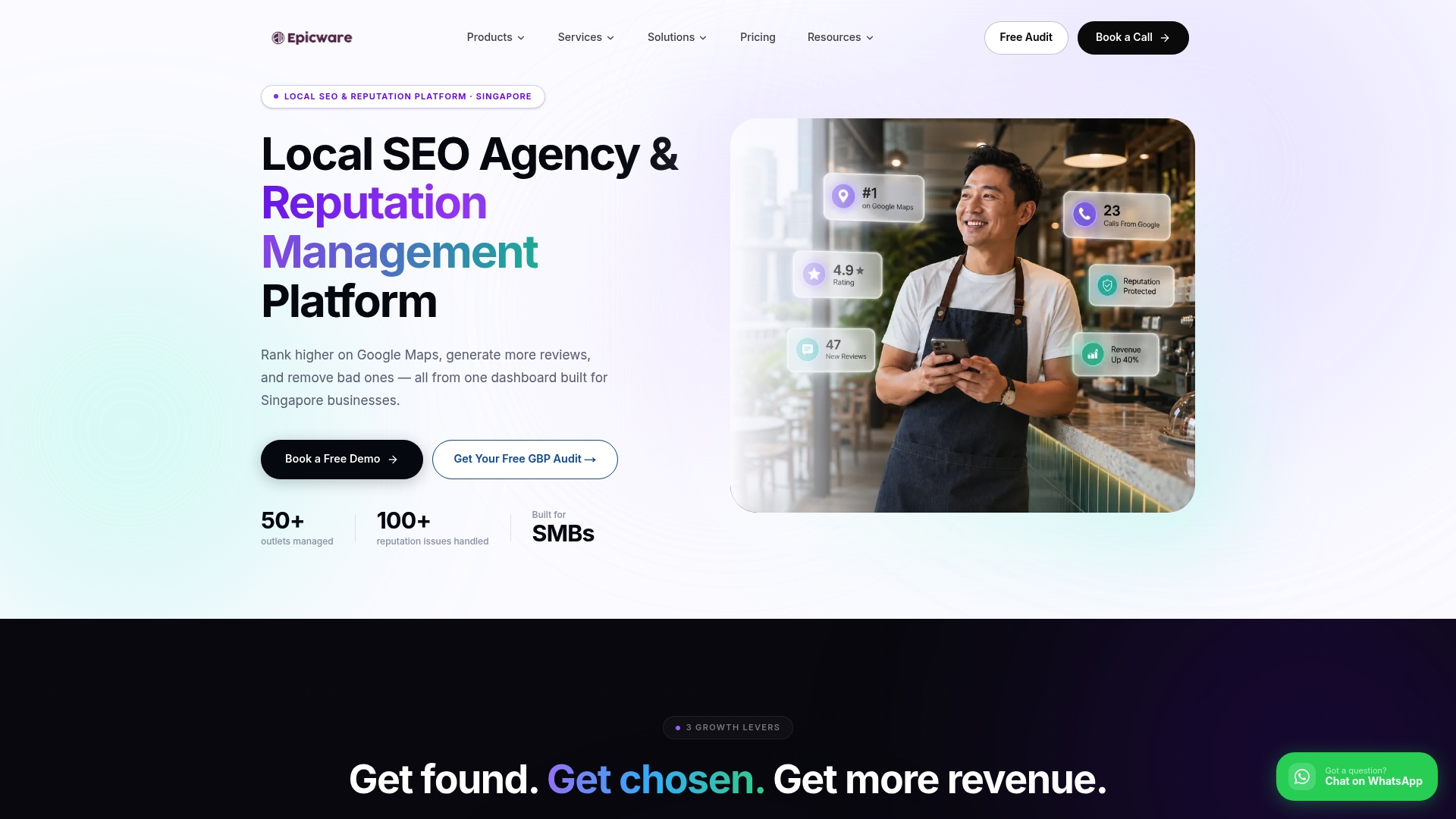
Epicware is built for businesses that want real results from their local SEO and reputation management, not just a dashboard full of data. The platform integrates Google Business Profile management, review monitoring, and AI-powered recommendations in one place. For businesses dealing with fake or unfair reviews, Epicware offers a bad review removal service where the $200 per-review fee is refunded in full if the review isn't taken down within 3 months. With over 50 outlets managed and a track record of measurable ranking improvements, Epicware gives business owners a clear path to stronger visibility.
FAQ
What are the five types of customer review platforms?
The five types are local search-facing platforms, dedicated company review sites, industry-specific directories, marketplace and seller feedback systems, and software or SaaS review hubs. Each type serves a different buyer stage and business goal.
Which review platform should a small business prioritize first?
Google Business Profile is the correct first platform for most small businesses because it is free and directly influences local search and Google Maps rankings. Build depth there before expanding to secondary platforms.
How does review syndication work?
Review syndication distributes a single set of collected reviews across multiple channels, including Google Seller Ratings, Bing, and marketplace listings. This multiplies the reach of each review without requiring separate collection efforts on every platform.
Are industry-specific review directories worth the effort?
Yes. Niche directories attract buyers who are already deep in the research phase, which means their traffic converts at a higher rate than general platform traffic. They work best as a complement to your primary platform, not a replacement.
What is the difference between product reviews and seller reviews on marketplaces?
Product reviews assess the item itself, including quality and performance. Seller reviews assess the business behind the transaction, including fulfillment speed and communication. Both affect your ranking and conversion rate on marketplace platforms.
See exactly where your Google Business Profile stands — and what's costing you customers — with a free audit from Epicware.
Get Your Free GBP Audit →Related Articles
Written by the Epicware Team at Epicware, an AI-powered digital marketing agency in Singapore.